How Trump Took the U.S. to War With Iran And Where It Stands Now
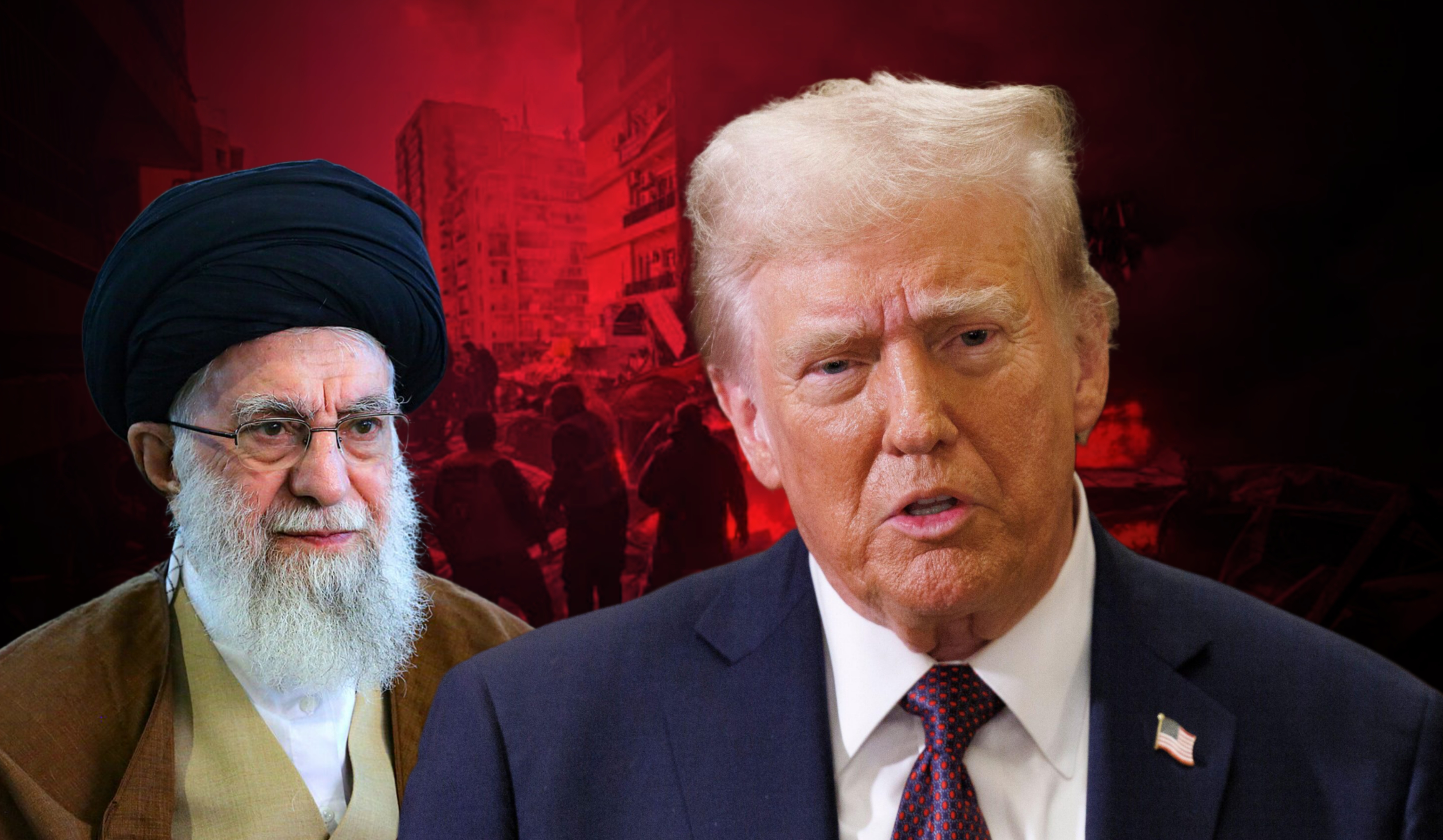
The Middle East has seen decades of tension, proxy wars, secret negotiations, and near-misses. But nothing in recent memory matched what happened in the early hours of February 28, 2026 — the day the United States and Israel launched one of the largest military operations in the region since the 2003 invasion of Iraq. What followed was weeks of strikes, fire, diplomatic brinkmanship, and a fragile ceasefire that the world is still watching with bated breath.
This is the story of how America went to war with Iran — and what it has cost.
The Road to War: Decades of Distrust
To understand how the United States arrived at this point, you have to go back further than just the past few months.
The war was preceded by years of conflict over Iran's nuclear program and its support for groups such as Hezbollah and Hamas. The roots go deeper still — to 1979, the Islamic Revolution, the hostage crisis, and four decades of mutual antagonism that never quite boiled into open war, but never cooled into peace either.
In 2018, the Trump administration's first term withdrew the U.S. from the Joint Comprehensive Plan of Action — commonly known as the Iran nuclear deal — and reimposed sweeping sanctions. Tehran, in response, gradually stepped up uranium enrichment. By 2025, tensions had reached a flashpoint. In June 2025, the United States conducted Operation Midnight Hammer, a limited series of strikes against key Iranian nuclear targets, decimating enrichment facilities at Fordow and Natanz and destroying metallurgy facilities at Isfahan.
But the limited strikes did not resolve the underlying standoff. If anything, they accelerated it.
The Final Hours Before War
In the days leading up to February 28, 2026, there were signals — from diplomats, from regional leaders, from back-channel negotiators — that a deal might still be possible.
Just before the strikes began, on February 27, Omani foreign minister Badr Al-Busaidi said a "breakthrough" had been reached and Iran had agreed both to never stockpile enriched uranium and to full verification by the IAEA. He said peace was "within reach," with talks expected to resume on March 2.
On February 25, Iranian foreign minister Abbas Araghchi had also stated that a "historic" agreement with the United States to avert military conflict was "within reach."
Those diplomatic overtures never got the chance to be tested. The war began anyway.
According to multiple credible reports, Crown Prince of Saudi Arabia Mohammed bin Salman had multiple phone calls with Trump urging him to attack Iran, and Trump's decision came after the Saudi Arabian and Israeli governments lobbied him repeatedly. U.S. Senator Lindsey Graham is also reported to have made one of the most compelling cases to Trump for an assault on Iran.
After the strikes, the Omani diplomat said he was "dismayed" that the negotiations had been undermined.
February 28: Operation Epic Fury Begins
President Trump announced the strikes via an eight-minute video posted on Truth Social at 2:00 AM Eastern time. There was no formal address to Congress beyond a War Powers notification and a briefing of the Gang of Eight.
Midmorning on February 28, U.S. and Israeli forces began conducting joint strikes on Iran, numbering nearly 900 in just the first 12 hours. The operation was codenamed "Epic Fury" by the U.S. and "Operation Roaring Lion" by Israel.
Trump's stated military objectives were fourfold: preventing Iran from acquiring a nuclear weapon, destroying its missile arsenal and production sites, degrading its proxy networks, and annihilating its navy. Regime change, while not formally declared, was widely understood as the operation's deeper ambition.
The opening salvo took out Supreme Leader Ali Khamenei and triggered a torrent of hundreds of retaliatory missiles and thousands of drones from Iran across the Middle East. Senior Iranian officials were killed in those first strikes as well.
The war had begun. And it would not stay contained.
The Human Cost: A Region in Crisis
The attacks generated immediate controversy when it was reported that a girls' school in a town east of Bandar Abbas was struck, killing about 170 people. Both the U.S. and Israel maintained they do not deliberately target civilians, but the toll mounted rapidly. A major university was also bombed during the course of the conflict, and healthcare facilities were heavily damaged.
By early April, more than 3,400 people had been killed across the Middle East — over 1,500 in Lebanon, 23 in Israel, and nearly 1,600 civilians within Iran according to human rights monitors. Thirteen U.S. service members were killed in action.
Hundreds of thousands of people in Lebanon were displaced, as Israeli strikes — operating separately under Operation Eternal Darkness against Hezbollah — expanded the war's footprint far beyond Iranian borders.
The Strait of Hormuz: The War's Global Chokepoint
The conflict's most sweeping impact on the world was not measured in bombs — it was measured in oil prices and empty gas stations.
The Strait of Hormuz, through which 20 percent of the world's oil passes, became the focal point of the war as Iran moved to blockade it. Commercial shipping through the strait dropped by more than 90 percent after the outbreak of conflict.
The U.S. Energy Information Administration sharply raised its oil, gasoline, and diesel price forecasts for 2026 and 2027, warning that energy prices were expected to remain elevated for much of the year and that full restoration of oil flows would take months.
For ordinary people — from motorists in India to families in Southeast Asia — the war in the Persian Gulf translated into fuel shortages, rationing, and soaring prices at the pump.
Deadlines, Threats, and a Fragile Ceasefire
By early April, the war had entered a new phase of high-stakes ultimatums.
Trump threatened to destroy all of Iran's power plants and bridges unless it reopened the Strait of Hormuz to all shipping traffic by an 8 p.m. Eastern deadline on April 7. He warned that "a whole civilization will die tonight" if no deal was reached — language that drew widespread condemnation from across the political spectrum and internationally.
Legal experts noted that wide-scale destruction of civilian infrastructure without distinction between civilian and military targets would constitute a war crime under international and U.S. law.
Then, less than two hours before his deadline, Trump announced a ceasefire. He wrote on Truth Social that the U.S. had "already met and exceeded all Military objectives" and was "very far along" with a long-term peace agreement. He added that Iran had submitted a 10-point peace proposal that he described as a "workable basis" for negotiations.
Pakistan served as a key intermediary between the two nations in brokering the ceasefire, with Prime Minister Shehbaz Sharif calling for both sides to observe the truce and inviting delegations to Islamabad for further talks.
The Ceasefire Under Strain
The ink on the agreement had barely dried before the region was shaking again.
Israel launched its largest coordinated strikes on Lebanon since the war began — targeting more than 100 sites in just 10 minutes — killing at least 182 people and wounding nearly 900 others, according to Lebanon's health ministry. The Trump administration and Israeli Prime Minister Benjamin Netanyahu maintained that the ceasefire with Iran did not cover operations against Hezbollah in Lebanon.
Iran's Islamic Revolutionary Guard Corps responded by claiming that shipping through the Strait of Hormuz had again stopped, citing Israeli ceasefire violations in Lebanon as justification.
Former U.N. Ambassador Nikki Haley warned that Iran views the two-week pause as a strategic delay, saying their strategy has always been to delay and that the U.S. must not let up pressure on Iran's missiles or proxies.
On the other side of the aisle, Senate Minority Leader Chuck Schumer called the war costly and counterproductive, citing a price tag of $44 billion and gas prices above $4 a gallon, and argued the country was worse off than before the conflict began.
What Comes Next
As of April 9, 2026, the ceasefire holds — but barely. Pakistan has invited U.S. and Iranian delegations to Islamabad on April 10 for further negotiations toward what Prime Minister Sharif called "a conclusive agreement to settle all disputes."
Two U.S. aircraft carrier strike groups, nearly 20 warships, and more than a dozen air squadrons remain deployed in the region. U.S. officials have confirmed there are no plans to withdraw the roughly 50,000 American troops stationed in the Middle East while negotiations continue.
The questions that will define the coming weeks are significant: Can a durable agreement be reached in Islamabad? Will Israel's continued operations in Lebanon unravel the fragile truce? And what does a post-Khamenei Iran — one whose military, nuclear infrastructure, and leadership have been severely degraded — actually look like going forward?
A War Still Being Written
The 2026 Iran war is, in many senses, still unfolding. It has already reshaped the Middle East, rattled global energy markets, tested alliances, and provoked fierce debate within America itself about the limits of executive war power and the cost of military action. Whether the ceasefire becomes a lasting peace, or merely a pause before a second storm, remains deeply uncertain.
What is clear is that the world woke up differently on March 1, 2026 than it had on February 27. And the consequences of those hours — for Iran, for the region, and for American foreign policy — will take years to fully understand.